Showing posts with label travel. Show all posts

Wednesday, 16 October 2013

California screaming! Hurtling towards the glorious Golden Coast from 10,000ft...

The view of the California coastline was always going to be breathtaking, although I didn't expect to see it screaming at the top of my lungs with a man I had never met before strapped onto my back.
But what better way is there to experience the fantastic Monterey Bay than skydiving?
And it was that thought that crossed my mind when I stumbled across Santa Cruz Skydiving, signed a whole host of daunting permission forms and then jumped out the plane at 10,000 feet with my friendly German instructor Volker.

The sky's the limit: Jill decided to take in the California view by throwing herself out a plane at 10,000 feet
The sky's the limit: Jill decided to take in the California view by throwing herself out of a plane from 10,000 feet
That is the beauty of a California road trip – the whole experience combines impulse with some of the most exciting destinations in the country, all washed down with the world-famous local wine.
The dazzling kaleidoscope of adventures that made up our California road trip began in San Francisco – it is best to start here and drive down Route 1, so you're on the side of the road closest to the coast without cars blocking the view.
We stayed three nights at the Sir Francis Drake, ideally positioned near Union Square to facilitate  my boyfriend James' worryingly extensive list of must-see activities.
The sky's the limit:
Volker, skydiving instructor on Jill Reilly's trip
Who moved the floor? Jill looks down as she jumps and back on terra firma with Volker (pictured near left)
With zebra print cushions, ornate floor-length mirrors and a grand dining table for six, the bedroom suite may have been too garish for some customers, but it was refreshing to stay in a hotel which was not afraid to stray from the norm.
On our first day we did the obligatory (but captivating) trip to Alcatraz island and ended up spending nearly five hours listening to chilling tales of life at the historic maximum-security penitentiary.
In the evening we headed to One Market - a Michelin-star restaurant which proved a glamorous antidote to a chilly and choppy boat trip back from Alcatraz.
Jill and James hired some bikes and cycled to the iconic Golden Gate Bridge, to watch the mist roll in from the Pacific
Taking a moment: Jill and James hired some bikes and cycled to the iconic Golden Gate Bridge, to watch the mist roll in from the Pacific
Taking in the tales:
Taking in the tales: Jill spent nearly five hours listening to chilling tales of life at the historic maximum-security penitentiary Alcatraz


Watch Jill's road trip along California's Route 1

San Francisco weather is changeable so layering is a must - we lost count of the number of locals who repeated Mark Twain's now famous joke: "The coldest winter I ever spent was a summer in San Francisco."

After visiting (and taking about 100 photos) at the iconic Lombard Street, a short, steep road consisting of eight hair-pin turns, we headed to Haight Ashbury the 'hippy area' of San Francisco where, in a haze of hallucinogenics, the Summer of Love kicked off in 1967.
 ..24 surf n turf.jpg
Time to dine: James tucked into his surf 'n' turf at Osso's steakhouse, a Great Gatsby-esque style restaurant
We hired some bikes and cycled to the iconic Golden Gate Bridge, watching the mist roll in from the Pacific as we made our way along the path shared by pedestrians and cyclists.

After all the cycling (San Francisco has some of the steepest hills I have ever pedalled up) we headed to Osso's steakhouse – a Great Gatsby-esque style restaurant in which James strapped on a plastic bib to take on his gigantic surf 'n' turf dinner.
After three glorious days, it was time to pick up a hire car and head to the seaside town of Santa Cruz - we'd watched 1980s American teen horror film Lost Boys, which was filmed there, so we knew what to expect. But Santa Cruz is much more than bloodthirsty vampires – it is actually the birthplace of surfing.
Local surfers proudly told us that in 1855 three Hawaiian princes ordered 15-foot surfboards carved from local redwood and paddled out at the river mouth where they took to the waves.
We stayed at the Hilton Santa Cruz/Scotts Valley, a well-equipped hotel which is bordered on three sides by California's famous redwood forest.
We spent a morning touring the Henry Cowell Redwood State Park with local tree expert Dave Kuty, craning our necks to see the magnificent ancient trees. The tallest tree in the park is about 285ft, and a stocky 16 feet wide.
The visit was broken up with impromptu appearances from deers, turkeys and the occasional giant yellow banana slug which are so famous here they serve as the Santa Cruz University mascot.
The soaring redwood trees
Reaching high: The soaring redwood trees dwarf everything around them

With a climate akin to the Mediterranean, California produces 90 per cent of America's wine and we spent a lazy few hours wine tasting at Storrs winery, a local family run business that produces a wide range of reds and whites.

Santa Cruz prides itself on its historical boardwalk which is over 100 years old– it contains the fifth oldest roller-coaster in America, built in 1924, but don't be fooled into thinking age equals timidity- it actually proved to be one of the most terrifying rides I have ever experienced.

After too much salt water taffy (an American seaside candy) we were back on the road, heading to the sparsely-populated Big Sur, a Californian hideaway that is a living example of the term 'picture postcard view'.
Route 1
On the road: Big Sur offers spectacular coastal views from the road

It was during this part of the holiday that the road trip truly came into its own as each breathtaking Route 1 vista commanded us to pull over the car and excitedly point out vivid sunsets across the Pacific, jagged rock formations and miles of unspoilt sandy beaches.
That is not to say the journey wasn't pretty terrifying at points as the road clings to unforgiving cliffs, but after a few squeals I decided that we weren't going to go over the edge and spent the time filling up the camera's memory card.
We stayed in a quaint cabin at the Big Sur Lodge, located within ancient groves of redwoods and oaks in Pfeiffer Big Sur State Park.

There are dozens of stunning hiking routes around the area, ranging from the easy to the more advanced for determined visitors.
Our cabin neighbour told us to head to the 'secret pink beach' - the narrow two mile path down to Pfeiffer Big State Beach is not signposted, only serving to increase the mystery.
But the trip was worth it – we were greeted with ribbons of pink and purple which gave the scene a feel of Narnia.
Next on our agenda was Hearst Castle in San Simeon– it's ostentatious design could not have been more jarring against the beauty of the Big Sur. The palatial home built high on a hill overlooking the Pacific Ocean was built by newspaper tycoon William Randolph Hearst and the 165-room castle took 28 years to design and build.
Life of luxury: The Roman Pool at Hearst Castle is a tiled indoor pool decorated with eight statues of Roman gods, goddesses and heroes

Not far away is Cayucos, but it is often missed by drivers with their foot pushed to the accelerator. 
Recently hailed as America's coolest smallest town, with saloons and eclectic antique emporiums, it is one of the state's last remaining old-fashioned middle-class beach towns.
We stayed at the family-owned Cayucos Shoreline Inn, a motel which is almost on the water it is so close to the white sandy beach. It is also famed for its dog-friendly attitude, with towels offered in each room for canine companions.
The trip felt like several holidays rolled into one as we swapped the mellow vibes of Cayucos for upmarket Santa Barbara, often dubbed ‘America’s Riviera.'
To suit our Riviera surroundings, we booked into the sleek Four Season Resort, built in the style of a Spanish colonial mansion and crowned with a 160ft Art Deco pool sat atop Butterfly Beach with a staircase leading down to the sand.
Wet, but not wild:
Wet, but not wild: A kayaking tour around the harbour proved to be the stage for Santa Barbara's wildlife - the magical two hours were filled with impromptu performances from dolphins, sealions and exotic birds


The pool is slightly larger than an Olympic-size swimming pool due to a poker game argument between the hotel’s previous owner and the Olympic Commissioner, leading the owner to increase the pool's size slightly so that it could never be used to host official events.
The walls are covered with photos of the rich and famous enjoying evenings at the private members' club and as I sat back drinking a cocktail, I felt like I was on a film set.
We tore ourselves away from the glamour of the hotel for a kayaking tour around the harbour which proved to be the stage for Santa Barbara's wildlife – the magical two hours were filled with impromptu performances from dolphins, sea lions and exotic birds.

Then it was another dip south to celebrity-magnet Los Angeles, where - in true L La Land style - we stayed at the Montage Hotel, known as a firm favourite with the likes of Kim Kardashian and co.
Just around the corner from Rodeo Drive (think pretty Woman), it oozes old-school glamour and is a perfect celebrity spotting venue with a smart rooftop pool.
The facial I had at the complimentary spa was truly decadent, although the UV skin session saw me running to buy eye serum the next day after finding out that my eyes were 'dehydrated.'
Seeing the rows of miserable tourists stuffed onto buses like cattle, we decided against doing an organised celebrity homes tour and instead bought a 'Homes of the Stars' map from a newspaper stand.
When we arrived at the residence of a certain famous footballer and his pop star-turned-fashion-designer wife, a driver in a sparkling white Bentley gave way and it was only as I waved him past I realised it was actually David Beckham. I was almost tempted to follow him.
Our final stop was Huntington Beach - an hour's drive away depending on the notoriously congested LA traffic.
Starry end: Jill finishes off her whirlwind trip with an obligatory photo at the Hollywood sign in Los Angeles
Starry end: Jill finished off her whirlwind trip with an obligatory photo at the Hollywood sign in Los Angeles
Only a week before, a mob had looted and damaged the downtown area when a riot broke out following the annual U.S. Open of Surfing.
But the town, billed as Surf City (to the chagrin of Santa Cruz's residents) had returned to its relaxed state by the time we arrived at the Hyatt Regency Huntington Beach Resort and Spa, a large beachfront hotel.

I felt like a true California girl as I ran towards the impressive waves with my board, determined to make the most of the famous surf.
The sandy stretch has around 1,000 fire pits which are free to use – you just need the firewood. So on our final night we finished off the trip of a lifetime sitting around a bonfire, toasting marshmallows and listening to the music drifting over from the nearby engagement party having their own fire on the beach.
And in that moment, I found myself unashamedly agreeing with original Santa Barbara girl Katy Perry in her number one smash hit California Girls: "You could travel the world, but nothing comes close to the Golden Coast."
And if you can see it from the air, while hurtling towards the great sweeps of beaches and patchwork vineyards on a terrifying skydive, then all the better.

Travel facts...plan your own California adventure

Santa Cruz skydiving (www.santacruz-skydiving.com) offers dives from $159 (£100).
Arrive in style: Cosying up on an Air New Zealand's Skycouch made for two
We flew out to the U.S. on Air New Zealand's Skycouch, which is essentially three seats that transform into a bed. A footrest came out from under each of the three seats and sprung up to form a flat bed with the touch of a button.
Provided with pillows, cover and a protective base, two people can lie down in the space, but 'spooning' is essential. When we were awake it was just as enjoyable to watch the huge array of films with the ability to move around and stretch your legs out rather than sitting bolt-upright for the long-haul flight.
Air New Zealand (www.airnewzealand.co.uk 0800 028 4149) flies from London to Los Angeles from £696 return.
Where to stay: California hotels
Sir Francis Drake (www.sirfrancisdrake.com), doubles from $249 (£161)
Santa Cruz Scotts Valley Hilton (www.hilton.com) has doubles from $249 (£160)
Big Sur Lodge (www,bigsurlodge.com) has doubles from $189 (£122)
Cayucos Shoreline Inn (www.cayucosshorelineinn.com) has doubles from $135 (£87)
Four Seasons Santa Barbara (www.fourseasons.com/santabarbara) has doubles from $645 (£416)
Montage Beverly Hills (www.montagebeverlyhills.com) has doubles from $720 (£464)
Huntington Beach Hyatt (www.hyattregencyhuntingtonbeach.com) has doubles from $175 (£113)

A palace on wheels it ain't! A naff blue bath, cheapo furniture and Philip's OAP railcard by his desk... the Royal Train faces the end of the line

Even the angriest class warrior would be hard-pushed to call it luxurious.
With the ambiance of a mid-range provincial hotel circa 1975, it has a homely simplicity, but it is no palace on wheels.

Formica panels, Fifties-style G-plan furniture, plastic baths and strip lights (no chandeliers here) would hardly lend themselves to an Agatha Christie-style whodunnit — unless, perhaps, one was filming Murder On The Leyton Orient Express.
Royal basics: Prince Charles's sitting room aboard the Royal Train has all the ambiance of a mid-range provincial hotel circa 1975

Snug: A single bed offers simple unfussy accommodation for royal travellers

It is also the slowest inter-city rail service in Britain.

But there is no other train on the planet that comes close in terms of charm, punctuality and eccentricity — let alone history.

 
That is why rail buffs and trainspotters will not be the only ones dismayed by the news the Royal Train could be heading for the buffers. And none will be sadder than the Queen and her family.

This week, Sir Alan Reid, the Keeper of the Privy Purse — the financial director of the royal household — appeared before the MPs on the Public Affairs Select Committee to discuss the state of the royal finances.
While public finances may have ballooned, the Monarchy has managed to halve its costs over the past 20 years.

Essentials: The Queen has a bath in her carriage
Wash and go: The Queen has a bath in her carriage while Philip prefers a shower

But its admirable policy of ‘make do and mend’ cannot go on indefinitely. At Buckingham Palace, the 60-year-old boilers are pushing up the fuel bills, the wiring hasn’t been touched since George VI was on the throne, bits of masonry are falling off and buckets have to be strategically placed under holes in the roof.

With all this alarming news to absorb, the MPs barely noticed Sir Alan’s additional disclosure that the Royal Train is in similar need of repair.
In a few years, a ‘major decision’ will be required regarding the Seventies rolling stock. And it will be an expensive one. ‘The figures’, this astute former international financier added, ‘are quite staggering’.

There is no question that Buckingham Palace and Windsor Castle must be properly restored. They are two of the most famous buildings in the world, national landmarks which belong to the nation, not the Queen.
But there will be less sympathy for the Royal Train. And Sir Alan’s reference to the ‘staggering’ cost of a new one suggests that he already knows it’s a non-starter.

In which case, the Royal Train seems destined to follow the dear old royal yacht, Britannia, in to retirement. And while that may please modernisers and republicans, royalists like me will regard it as a crying shame.

The vast majority of royal rail journeys involve scheduled services. But the Royal Train has its uses.
Critics always focus on the headline figure of the train — £1 million a year to run, or £20,000, say, for a trip to Scotland — without acknowledging the advantages of a royal mobile home.

It’s extremely secure, it can accommodate all the paraphernalia of a royal tour and, unlike the alternatives, it is virtually foolproof.
If a whole county is waiting to see the Queen, then a whole county will be let down if her helicopter is grounded by fog or her car gets stuck in traffic.

Thanks to the Royal Train, everyone knows that she will be in Swansea or Lincoln or Ayr to the nearest ten seconds (though Royal Train drivers try to stick to a five-second margin of error).

As for the Royal Family themselves, it really is the proverbial home-from-home — familiar staff, a favourite armchair, the same old tea cups.

With its distinctive royal claret coaches, the train attracts an enormous amount of attention wherever it goes

An abiding memory of my only tour inside — during the 2002 Golden Jubilee — are the boxes of Tesco tissues on the royal tables.

When not in use, it all sits in a large railway shed at Wolverton, near Milton Keynes, where a skeleton crew keep the nine claret-coloured carriages and their contents in mint condition.

Not that they are called carriages. They are ‘saloons’.
The Queen, the Duke of Edinburgh and the Prince of Wales each have their own saloon while additional wagons, looking much like regular sleepers and First Class carriages, feed and accommodate the staff.
There is no permanent royal locomotive, although the operator, DB Schenker, will only hitch one of its classier models to the royal rolling stock.

And since 2007, the Royal Train is powered by eco-friendly bio-fuel.

Royal passengers sleep in single beds which run lengthways behind a partition in the centre of the carriage (for optimum stability and a good night’s sleep). All the other bunks lie across the carriage, as in a conventional sleeper.
The Queen has a bath in her carriage while the Duke of Edinburgh prefers a shower — and keeps a blown-up image of his first Senior Citizen’s Railcard alongside a chunk of Brunel’s original broad gauge.

Affairs of state: Queen Elizabeth works at her desk on the Royal Train in May, 2002

The Queen's bedroom on an earlier, and perhaps slightly more luxurious, incarnation the Royal Train taken in 1946
The Queen's bedroom on an earlier, and perhaps slightly more luxurious, incarnation the Royal Train taken in 1946. The current train has been in service since 1977

Charles keeps a handmade pot-pourri holder, presented long ago by a girl in Haverfordwest, next to his bed and a picture of Britannia above it. As well he might.
The similarities with Britannia are everywhere — from the plain furniture and antiquated telephones to the absence of double beds (if the Duchess of Cornwall is on board, she has her own saloon — complete with pink bathroom).

As Brian Hoey points out in his fascinating book, The Royal Train, when Edward VII became King, he stipulated it should ‘be as much like the royal yacht as possible’.

The current Royal Train dates back to the 1977 Silver Jubilee. Then, it consisted of 14 carriages for the use of all the senior members of the family. Sometimes two trains would be in action. On one day in 1986, no less than three could be seen in different parts of the country.

By the late Nineties, cost-cutting had reduced the number of wagons to nine and royal use was restricted to the Queen, the Duke of Edinburgh and the Prince of Wales.

None of them has ever been as demanding as the earliest royal passengers. Queen Victoria was the first monarch to board a train when she made the journey from Slough to Paddington in 1842. Brunel himself was on the footplate.

To general relief, Her Majesty much enjoyed the experience and was soon making her mark on Britain’s rail network.
All change: The Queen and her corgis disembark in 1968

Having decreed she would neither eat nor go to the lavatory on board, lavish ‘refreshment’ buildings were built along the route north to Scotland. Victoria commissioned the wagons which became the first Royal Train.
While Prince Albert invented the first train lavatory, George V went one better and was the first person in the world to install a bath on a train.
It was 1915, the nation was at war and he wanted to tour Britain without descending on the nearest country house each night and causing mayhem.
In time, Queen Mary became a convert to the 55in bath, though she imposed a speed limit of 5mph when sitting in it.

A full-size bath was installed in 1941 as George VI and Queen Elizabeth began extended wartime tours of the country by rail.

By the end of the war, it was calculated they had travelled 63,000 miles. But distance is only half of the story.

Now, as then, royal passengers spend a lot of their time at a standstill. In order to avoid any inconvenience to regular rail services, the train will meander along branch lines and wait until the main services have ceased before taking to the major routes.

When it is reasonably near its destination for the following morning, it then parks in a secure siding until dawn.
The driver — drawn from a pool of 50 — will then begin a stately progress to the final destination.
Drivers pride themselves on a jolt-free ride, just as the on-board chef takes great delight in preparing the scrambled eggs and bacon exactly the way the Queen likes them.

Most of us will never even see inside this thing, let alone travel in it. But, as with Britannia, that does not stop us taking great pride in a classic piece of romantic, understated British elegance.

But for how much longer? It will certainly be a sad day when there is no longer a claret-coloured saloon carrying the head of state across the nation which invented the train in the first place.

Tuesday, 8 October 2013

Best websites for... leaf-peeping: Where to feel the autumn crunch beneath your feet

Seasons of mists and mellow fruitfulness...It's a nice line, but Keats' eulogy of autumn omitted the best thing about the season: the changing colour of the leaves from green to a multi-coloured palette of bronzes, oranges, crimsons and scarlets.
Autumn leaf
Fantastic fall: A seasonal walk can put you in the midst of a riot of colour
October is the prime month for viewing the autumn foliage. To find out where to go, both at home and abroad, turn to the following websites.

Tuesday, 1 October 2013

Controversial plans to change how pilots' hours are regulated are rejected by EU over safety fears

British pilots celebrated after a key EU transport committee of MEPs rejected plans to impose controversial new flight time rules which they believe were unsafe.
Pilots claim the proposed changes to flying hours and rostered rest periods will put lives at risk by increasing the chances of fatigued fliers falling asleep in the cockpits of packed passenger planes.  
British pilots are celebrating after a EU transport committee rejected plans to impose controversial new flight time rules which they say are unsafe
The proposals still face further votes in coming weeks by the full European Parliament and the Council of Ministers, in which British ministers have a voice.
Puts lives at risk: British pilots are celebrating after a EU transport committee rejected plans to impose controversial new flight time rules which they say are unsafe

Monday, 16 September 2013

Sydney is riding the freshest of waves...and now's the time to grab your board and visit

Huge energy courses through Australia these days. America used to be like this in the 1970s and 1980s. It's as if a 240-volt electrical current is constantly buzzing through the place, galvanising its people to do things bigger and better. Take Mark Best. He remembers, in his mid-20s as a mining electrician, eating his lunch out of a tin 5,000ft below the Earth's surface in a crib full of craggy old gold miners. Today he is one of Australia's most celebrated chefs. His Sydney restaurant Marque is haute cuisine central and has been voted one of the world's top 50.
Sydney skyline
Cultural hub: Sydney Opera House is in need of a multi-million pound refurbishment
Then there's Richard Graham. He is a highly articulate bespoke tour guide who left school at 15 unable to write grammatical English, was running his own successful and lucrative business by 19, and claims to be related to the Queen. Now he runs My Sydney Detour (mysydneydetour.com), whose aim is to turn clients into Sydney locals in a day. So how do British travellers visiting

Sunday, 15 September 2013

Looking for the Borgias: A road trip through Italy seeking the 16th century's warrior clan By Sarah Dunant

I was suffering from acute archive fever when we booked our flights to Bologna.
I had spent most of the year hunched over a computer or in libraries, my head buried in a hundred history books while planning Blood And Beauty, my novel about the Borgias.
The Borgias
Sarah Dunant
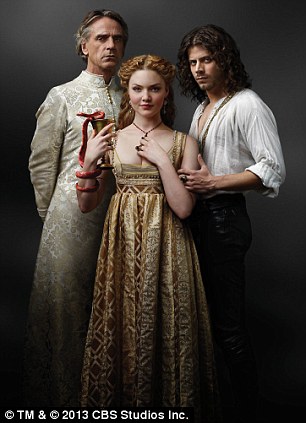
In search of the power-brokers of the 16th century: Novelist Sarah Dunant (right) is an expert on the Borgia clan - seen, left, as portrayed in drama The Borgias by Jeremy Irons, Holliday Grainger and François Arnaud
My partner Anthony and I had also spent a weekend 'doing' the Vatican, sneaking into the Borgias' apartments (they were supposed to be closed for restoration) and exploring the Sistine Chapel, trying to imagine this amazing space before Michelangelo applied his brushes to it.

Wednesday, 24 July 2013

Crazy beautiful Spain: Dabbling in Dali and enjoying a long siesta on the Costa Brava

The Costa Brava's rough and rugged coast has always felt ever so slightly like second-class Spain.
That's compared, say, with Malaga and Marbella, where the late King Fahd of Saudi Arabia had a grand palacio, or Majorca, where the Spanish Royal family spend their summer holidays in a handsome castillo by the sea.
Cadaques
Bravo, Costa Brava: This region of northern Spain is home to picturesque villages such as Cadaques
But a recent family holiday proved how wrong I was.
We stayed in a town north of Barcelona called Palamos, which starts by the sea and then climbs up a steep hill where scores of attractive villas have been built over the past ten or 20 years, mostly for well-heeled foreigners.
Looking from our balcony I counted the dazzling blue of at least a dozen swimming pools — almost every house had one.
I also realised with excitement that we were near the north-east corner of Spain, which Salvador Dali made famous.
Catalan to his fingertips, the great artist-cum-showman, with his piercing black eyes, waxed moustaches, black cape and jaunty fedora, was born in the little town of Figueres, where his father was a public notary. But it was in the fishing villages of Cadaques and Port Lligat, where he lived and painted for much of his life, that he was happiest.
Salvador Dali
Salvador Dali
Happiness is egg-shaped: The Salvador Dali House-Museum, which perches at Portlligat bay, just to the north of Cadaques (left), ensures that the surrealist vision of a true eccentric (right) is still visible on the Costa Brava
This was his personal paradise.
It was here in the tranquillity afforded by the wild landscape, rocky beaches and hidden coves, in the rambling house and studio built on several levels from a series of fishermen's cottages, strung like beads on a necklace along the seashore, that Dali did his best work.
We set off one morning, my wife Eleanor and me, three daughters, and three grandchildren in two hire cars, a smart, brand-new Volkswagen and an even snappier Alfa Romeo for the Dali House-Museum at Port Lligat. There are two other Dali Museums — one in Figueres, and another at Pubol Castle, but it is here you feel Dali's ghost lurking, ever ready for a surrealist prank.
You can see unfinished work on the easels in his studio — a pale mauve Adonis on one and a white-gowned goddess on the other - and as you climb from room to room, Dali's life unfolds.
Outside the master bedroom where his wife Gala lay dying, her bed turned to face the sea, you pass a portrait of her, one breast exposed, her piercing eyes following you.
Next door is the oval sitting room Dali designed for her, with its amazing acoustics - so sharp you could almost hear a pin drop. Beyond that, its walls covered with photographs, is a room which celebrates Dali's love affair with America: Dali with Walt Disney and Harpo Marx; with Laurence Olivier and Gregory Peck and dozens of others.
Sandy Gall
Sandy Gall
Tucking in: Sandy enjoys a spot of fresh Costa Brava seafood - before heading for the region's pristine beaches
Outside in the garden is a phallic-shaped swimming pool with a stuffed lion and a giant imitation snake peering from the undergrowth and the famous sofa, a copy of Mae West's red lips, serving as a seat.
Small, dynamic and mysterious, Gala was Dali's muse. She groomed him for success, making sure he was chained to his easel, turning out masterpieces.
When they had little money at the beginning, she was his cook, housekeeper, nanny, nursemaid, mother and lover. She knew a thing or two about artists — she had been married to French surrealist poet Paul Eluard and was a mistress of the painter Max Ernst.
Having seen how Dali lived, we decided to try what the guidebook told us was one of his favourite restaurants. At the far end of the harbour, right on the waterfront, Sa Gambina was already filling up with locals and tourists, and we were lucky to find a table to seat all eight of us.
Sandy Gall
Full house: The Gall clan enjoyed a sun-kissed week on the Costa Brava
We ordered the local white wine, deliciously tangy, and then scrutinising the menu, my eye fell on one of my favourites — grilled crayfish.
After a decadent seafood lunch, we swam in the pool at our villa.
Though the best swimming was from a wonderful beach a mile or so long at Calafell, south of Barcelona where we spent the first week of our holiday.
We would walk the smooth sand for half an hour and then plunge into an opalescent sea, swimming the 300 yards to the buoys which marked the speedboat limit. It was like bathing in silk.
In the evening we strolled from our house to the clutch of small restaurants which lined the sea front. Our favourite, L'Espinetta, specialised in small, deep-fried squid, called calamarettis.
Perhaps the most extraordinary place we visited was the marmalade museum run by a charming old lady, Georgina, who makes more than 100 different varieties, from her gold medal winner, kumquat, to pomegranate and hibiscus, chocolate and fig, and, of course, the classic Seville orange.
Cadaques
A place for reflection: Cadaques was one of the great inspirations for Dali's life and painting
To crown our tour of inspection, she uncorked a bottle of the local sparkling wine, Cava Espelt, which was delicious.
Since we wanted to buy some wine, our friend and mentor, Diana Soler, who lives in Barcelona, suggested we try a local vineyard, Oller del Mas, where we tasted and bought half a dozen bottles of their robust, claret-type red, sampling one vintage after another.
What better way to round that off than with the grandest of Spanish traditions, a long lunch and lazy siesta.